Step Off the Ladder: What Happens When Artists Finally Stop Hustling
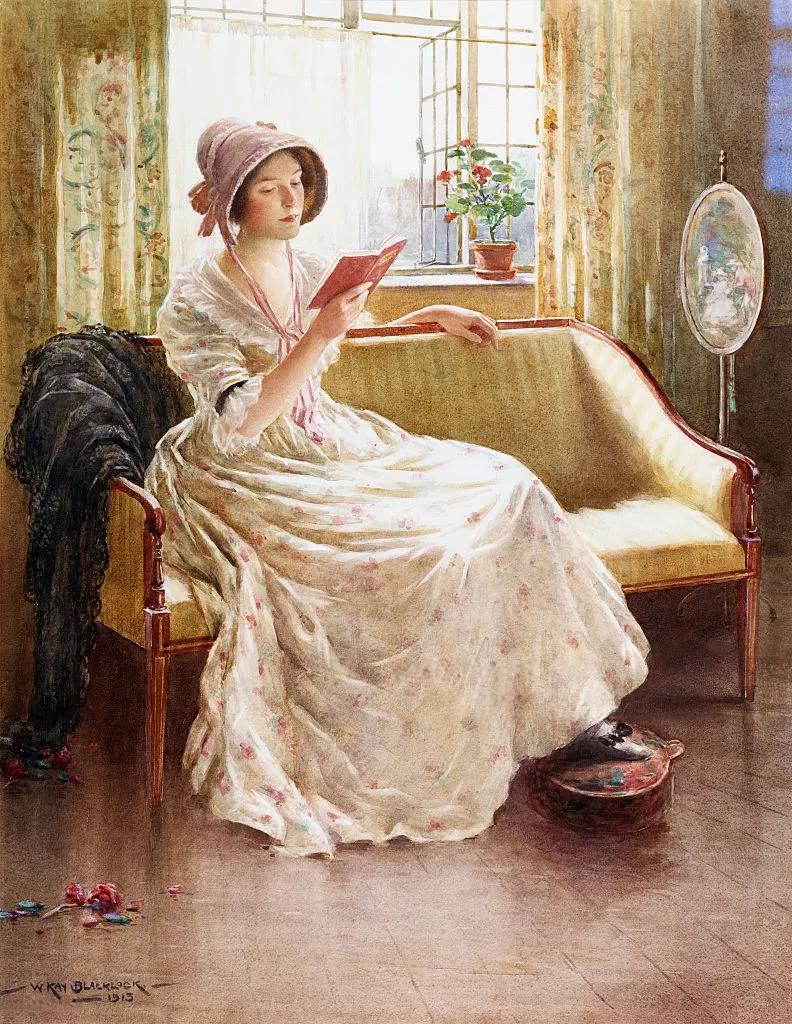
Photo: William Kay Blacklock, Public domain, via Wikimedia Commons
The Breaking Point Nobody Talks About
Somewhere between the third Instagram post of the week and the fourth unanswered gallery inquiry, something in Priya Nandakumar snapped.
"I was sitting at my desk at midnight, photographing a painting I'd finished an hour earlier, trying to figure out the right caption," she says. "And I realized I hadn't actually looked at the painting. I'd made it, but I hadn't seen it. I was already thinking about the content."
Nandakumar is a painter based in Brooklyn who, by most external measures, was doing everything right. Represented by a respected mid-size gallery, a social following in the solid five figures, a waitlist for commissions. She walked away from almost all of it for eight months. Not because the work stopped selling, but because she stopped being able to make work she believed in.
Her story is increasingly common — and increasingly discussed, at least in private conversations among artists who've built something real and found themselves wondering what it cost them.
The Hustle Hangover
The art world has always been demanding, but something shifted in the last decade. The rise of social media as a primary sales and discovery channel didn't just change how artists market themselves — it fundamentally altered the rhythm of creative production. Posting consistently means producing consistently, which means the gap between making something and releasing it into the world has collapsed almost entirely.
"There used to be this incubation period," says Marcus Teel, a digital illustrator from Atlanta who took a six-month step back from client work in 2023. "You'd make something, sit with it, let it breathe. Now the expectation is that you make something and immediately share it. That's a completely different creative metabolism."
Teel had been running at that pace for nearly five years when his body made the decision for him. Chronic insomnia, a persistent inability to start new projects, and what he describes as "a kind of aesthetic numbness" — he'd look at work he admired and feel nothing. "That was the scariest part," he says. "I couldn't feel the thing that made me want to do this."
The clinical term is burnout, but many artists resist that framing. Burnout sounds like a management problem, a scheduling issue. What they describe feels more existential — a disconnection from the creative impulse itself, not just fatigue from overwork.
What It Actually Costs to Stop
Let's not romanticize this. Walking away from a working career, even temporarily, is a financially brutal decision for most artists — and the people who can afford to do it are not evenly distributed.
Nandakumar is candid about her privilege in this conversation. "I had savings. I had a partner with income. I had a gallery relationship that, while strained by my absence, didn't disappear. A lot of artists don't have any of that."
The financial architecture of an art career is notoriously fragile. Galleries expect consistent output. Collectors who've been following your work expect new work. Algorithm-dependent platforms punish inactivity with reduced reach that can take months to rebuild. Taking a sabbatical isn't just an emotional decision — it can mean losing ground that took years to accumulate.
And yet the artists who've done it are almost uniformly clear that the cost of not stopping was higher.
"I was producing work," says Teel. "But I wasn't making art. There's a difference, and I think anyone who's been in this long enough knows exactly what that difference feels like."
What the Pause Actually Looks Like
For most of the artists who spoke to Paints on Ladders, the sabbatical wasn't a vacation. It was an uncomfortable, often anxiety-inducing period of sitting with uncertainty and resisting the urge to fill every quiet moment with productivity.
Nandakumar describes the first two months as genuinely difficult. "I kept opening my laptop to post something. I'd sketch things and immediately think about how to photograph them. The habit of performing creativity was so deep that I had to actively fight it."
What eventually emerged — for her and for others who've taken similar pauses — was a slower, more private creative practice. Sketchbooks that weren't for sharing. Experiments with materials she'd been curious about for years but never had time to pursue. Long walks. Reading. The unglamorous work of remembering why she became an artist before anyone was watching.
Teel used part of his sabbatical to take a printmaking class at a local community arts center — something he'd wanted to explore for years but had always deprioritized in favor of billable work. "Being a beginner again was humbling and also incredibly freeing," he says. "Nobody expected anything from me in that room. I could just make bad prints and learn."
Building Something Different on the Other Side
The artists who've come through a significant creative pause don't tend to return to exactly the same model they left. That's partly by design and partly by necessity — the market and the platforms shift while you're gone, and there's no guarantee your old audience is waiting.
Nandakumar has restructured her practice significantly. She posts less — far less — and has been explicit with her audience about why. The response surprised her. "I expected people to be frustrated or to just disappear. Some did. But a lot of people wrote to me saying they were relieved. That they were tired of the pace too."
She's also renegotiated her gallery relationship to build in longer production timelines, accepting fewer shows in exchange for more time with each body of work. It's a trade-off that has cost her some visibility and, in the short term, some income. She considers it non-negotiable now.
Teel has moved away from high-volume client work toward fewer, longer-term collaborations that allow for the kind of creative development that's impossible when you're turning around a project every two weeks. "I make less money than I did at the peak," he says simply. "I make better work."
The Radical Act of Slowing Down
There's something almost countercultural about an artist choosing to slow down in a moment when the entire infrastructure of the contemporary art world — social platforms, gallery cycles, art fairs, content algorithms — is designed to reward relentless output.
But maybe that's exactly the point. The artists who've stepped back aren't arguing that hustle culture is simply exhausting — though it is. They're arguing that it produces a specific kind of art: reactive, performance-oriented, optimized for engagement rather than meaning. And they're not interested in making that art anymore.
"I spent years climbing as fast as I could," says Nandakumar. "And I got somewhere. But I looked around and realized I didn't recognize the view. The pause wasn't a retreat. It was how I figured out where I actually wanted to go."
Sometimes the most radical thing a painter can do is put down the brush — and wait until picking it back up means something again.