Boxed In and Breaking Through: Why the Best Art Happens Inside the Walls
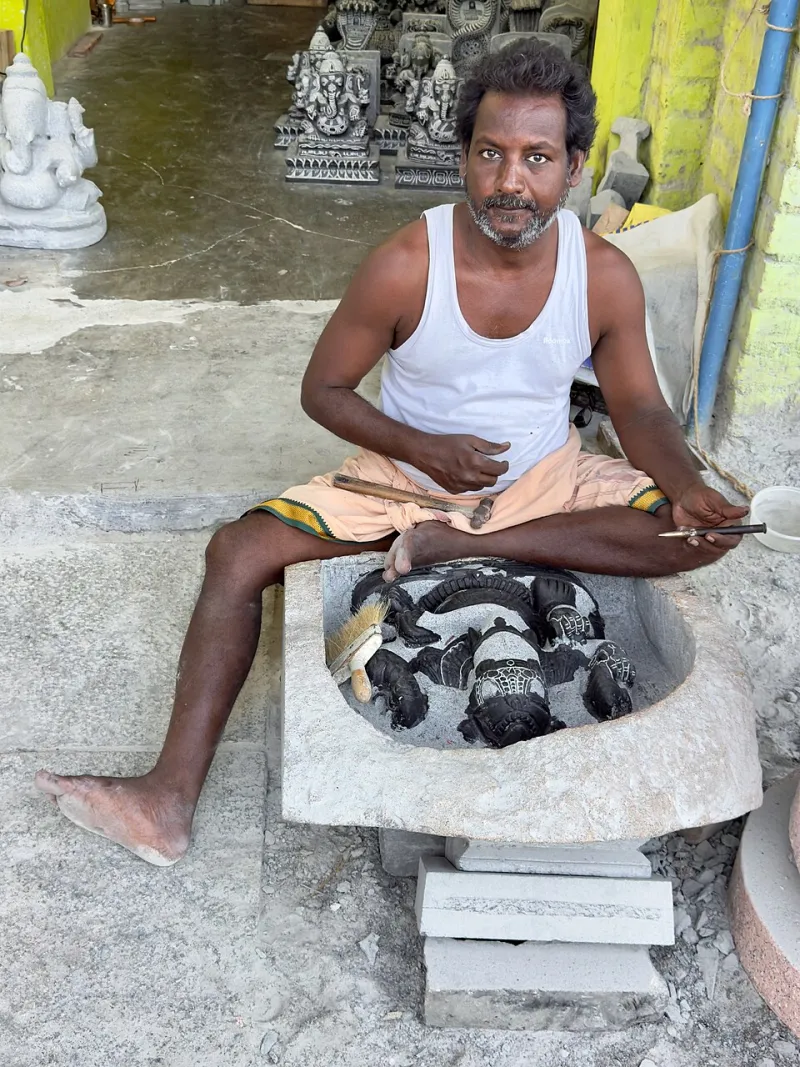
Photo: Oleg Yunakov, CC BY-SA 4.0, via Wikimedia Commons
There's a particular kind of creative panic that hits when you're standing in front of infinite possibility. Blank canvas, open brief, unlimited time. You'd think that's the dream. But ask almost any working artist and they'll tell you: total freedom is its own kind of trap.
Something strange happens when you take that freedom away.
Limitations — the ones artists choose for themselves, or sometimes have thrust upon them — have a weird habit of producing the most interesting work. The constraint isn't the obstacle. In a lot of cases, it is the ladder.
The Paradox Nobody Talks About
Psychologists have a name for the paralysis that comes with too many options: the paradox of choice. Barry Schwartz famously argued that more choices lead to worse decisions and less satisfaction. Creative people feel this acutely. When you can paint anything, what do you paint?
But when you can only paint in one color? When you have 48 hours and a six-foot canvas and nothing else? Suddenly the brain stops flailing and starts solving.
New York-based mixed media artist Dara Osei works exclusively with materials she can carry in a single backpack. No studio. No supply runs mid-project. Whatever's in the bag is what the piece gets.
"People assume it's some kind of poverty aesthetic, like I can't afford more," she says, laughing. "But I tried working in a full studio with everything available and I made the most boring work of my life. The backpack forces me to be ruthless about what matters. Every mark has to earn its place."
Her recent series — intricate charcoal and beeswax works on reclaimed cardboard — sold out at a Brooklyn pop-up last fall. The constraint didn't diminish the work. It gave it an urgency that a fully stocked studio probably couldn't have generated.
The Time Box
Deadlines get a bad reputation, but artists who've experimented with radical time constraints often describe the experience in almost spiritual terms.
Chicago-based illustrator Marcus Vell started running what he calls "sprint sessions" — 48-hour creative lockdowns where he commits to completing an entire body of work before the clock runs out. No second-guessing, no revision spirals, no stepping back for perspective.
"The first time I did it I thought the work would be garbage," he admits. "And some of it was. But buried in there were three pieces that were more alive than anything I'd made in the previous year. I think it's because I didn't have time to talk myself out of the weird decisions."
That's the thing about time pressure — it silences the inner critic just long enough for the inner weirdo to get some work done.
Vell now runs sprint workshops for emerging artists in the Chicago area, many of whom arrive skeptical and leave with their best portfolio pieces to date. "I tell them: the timer isn't your enemy. The timer is the only friend in the room who's being completely honest with you."
One Color, Infinite Depth
Palette restriction is maybe the oldest trick in the constraint playbook, and it keeps proving itself. Artists from Picasso's Blue Period to contemporary monochromatic painters have found that eliminating color choice doesn't flatten the work — it deepens it.
Los Angeles painter Simone Arquette works in a single color per series, sometimes spending an entire year with nothing but variations of one hue. Her current obsession is a particular shade of burnt sienna that she mixes herself from raw pigment.
"When you take away the color decision, you start seeing everything else," she explains. "Texture becomes the conversation. Value becomes the drama. You stop hiding behind the easy wow of a beautiful color combination and you have to actually build something real underneath."
Her canvases — monolithic, layered, almost geological in their surface quality — have drawn comparisons to Mark Rothko, though Arquette bristles at the reference. "Rothko was exploring transcendence. I'm exploring what happens when you refuse to leave the room."
The Science Behind the Squeeze
This isn't just artistic intuition. Cognitive science backs it up. Research from institutions including Johns Hopkins and Stanford has found that constraints activate what's called "Type 2" thinking — slower, more deliberate problem-solving that tends to produce more novel solutions than unconstrained brainstorming.
When the brain knows it can't take the obvious route, it starts mapping the terrain differently. Obstacles become waypoints rather than dead ends.
There's also something to be said for the identity that constraints create. A painter who works only in encaustic wax, a sculptor who uses nothing but salvaged highway materials, a photographer who shoots only on expired film — these aren't just quirks. They're creative signatures. The limitation becomes the voice.
Building Your Own Walls
So how do you actually put this into practice without it feeling like a gimmick?
The artists we spoke with were unanimous on one thing: the constraint has to be meaningful to you, not just arbitrary. Deciding you'll only paint on Tuesdays doesn't work if Tuesday is just Monday with a different name. The limitation needs to create genuine friction — something that pushes back against your habits.
Osei suggests starting with materials: "Take away one thing you rely on and see what fills the gap. Take away your favorite brush. Take away the color you always reach for first. The absence will tell you something true about your process."
Vell recommends time: "Set a deadline that scares you a little. Not so short that it's impossible, but short enough that you can't procrastinate your way to safety."
Arquette goes deeper: "Ask yourself what you're hiding behind. What's the crutch? That's the thing to remove."
The Ladder Metaphor, Unpacked
Here at Paints on Ladders, we think a lot about what it means to climb — to reach for work that goes beyond the expected. And there's something fitting about the fact that a ladder is, itself, a constraint. You can only go up or down. You can't wander sideways. The structure forces direction.
Maybe that's the whole point. The artists who do the most interesting work aren't the ones with the most options. They're the ones who figured out which options to throw away — and built something extraordinary with what was left.
The walls aren't the problem. Sometimes the walls are the whole painting.