Altitude Adjustment: The Artists Who Moved Their Studios Into the Sky and Never Looked Back
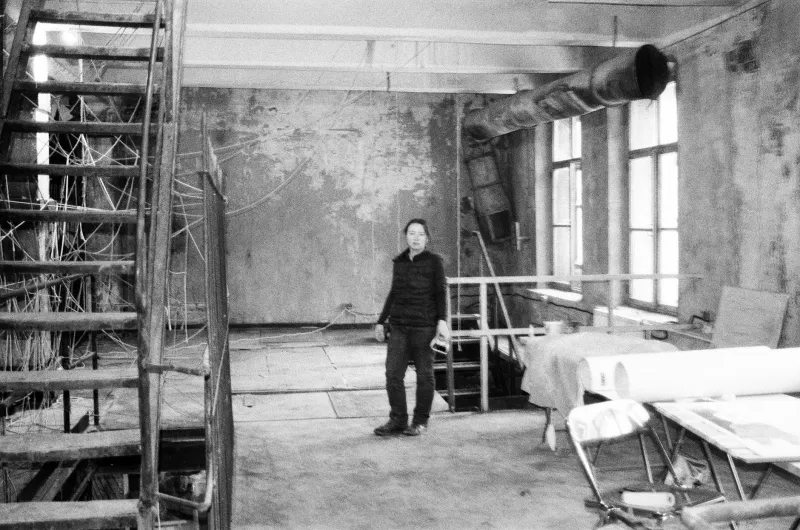
There's a moment, about halfway up the exterior staircase of a converted textile mill in Paterson, New Jersey, when you stop thinking about your to-do list. The city spreads out below you. The wind does something unexpected to your hair. By the time you reach the top floor — a sprawling, raw-ceilinged studio where painter Delia Voss has worked for the past four years — you've already left a version of yourself behind on the ground.
"People always ask me if the climb is annoying," Voss says, pulling a drop cloth off a canvas so large it nearly touches both walls. "I tell them it's the whole point. I'm different by the time I get here. Something shifts."
Voss is part of a loose, largely informal movement of artists across the US who have deliberately chosen elevated, unconventional spaces as their primary studios — not because they're cheap (though sometimes they are), not because they're trendy (though sometimes that too), but because the physical act of ascending to create turns out to matter enormously. The altitude isn't incidental. It's the work.
The Commute as Creative Ritual
In most conversations about studio practice, the space itself gets all the attention — the light, the square footage, the neighborhood. But these artists are pointing at something different: the transition. The getting-there.
For sculptor Marcus Obi, who maintains a studio on the mezzanine level of a former auto parts warehouse in Detroit, the climb is a kind of decompression chamber. "I come from a loud house," he says. "Three kids, a dog, a partner who also works from home. By the time I've gone up those stairs, I've done something. I've made a choice that I'm here now. The work knows it too."
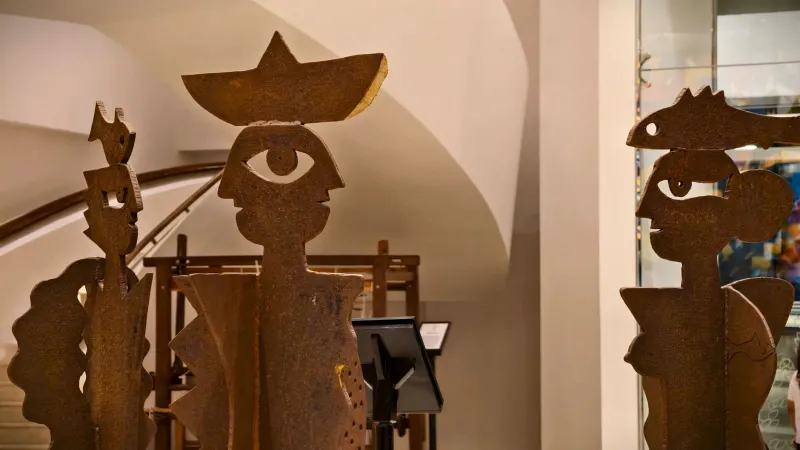
Obi's sculptures — large-scale welded steel pieces that reference both industrial architecture and West African ceremonial objects — have a quality of stillness that visitors often find surprising given their size. He attributes part of that to the elevated vantage point. "When you're up high, you see the whole thing differently. I'm looking down at my work as I make it. That changes the proportions. It changes what I think needs to be there."
This isn't just poetic musing. There's a practical spatial logic at work. Working at height, whether on a mezzanine, a rooftop, or a loft platform, often means working with less floor space but more vertical volume. Artists adapt. They think upward. They lean into scale in ways that ground-floor studios, with their psychological ceilings, sometimes discourage.
Rooftop Studios and the New Urban Vertical
In cities where studio space has become genuinely unaffordable — New York, LA, Chicago, San Francisco — some artists have gotten creative with what's technically available. Rooftops, long the domain of HVAC units and the occasional grilling situation, have started to appear in studio listings. Informal arrangements with building owners. Converted water tower rooms. Penthouse-level spaces that nobody thought to use for anything serious.
Brooklyn-based performance and video artist Tamsin Roy built her practice around a rooftop studio she negotiated access to in Bushwick six years ago. The setup is modest — a weatherproofed structure that's part shed, part greenhouse, part editing suite — but the impact on her work has been anything but.
"Everything I make now has a sky reference," she says. "I didn't plan that. It just started happening. When you spend your creative hours with that much open space above you and around you, it gets into the work."
Roy's video pieces, which often feature performers navigating architectural transitions and threshold spaces, have been shown at festivals across the country. She's careful not to over-romanticize the setup. "It leaks in the rain. It gets genuinely terrifying in high wind. Last January I couldn't work up there for three weeks." She pauses. "But those three weeks were some of the most productive I've had in a ground-floor borrowed space, because I was desperate to get back up."
What Viewers Bring to Elevated Encounters
There's another dimension to this conversation that goes beyond the artist's experience: what happens when the audience has to climb too?
Several of these studio-in-the-sky practitioners have started hosting open studio events that make the ascent part of the experience. The result, they report, is a measurably different kind of engagement. Visitors who've had to take three flights of stairs, or navigate an exterior fire escape, or ride a freight elevator that moves at the speed of reluctance — they arrive differently. They're present. They've already done something.
"People don't scroll on their phones on the way up," says Voss. "They can't. They're watching their feet, or they're looking out, or they're talking to whoever they came with in a way they haven't all day. And then they walk into the work and they're actually there."
This is, arguably, a form of curatorial design that most conventional gallery spaces can't replicate. The white cube is deliberately neutral, deliberately frictionless. These elevated studios introduce friction on purpose — and that friction, it turns out, is generative for everyone in the room.
The Community Question
One critique worth sitting with: does moving your studio up and away from street level mean moving away from community? It's a fair push. Some of the most vital public-facing art practices in the US are rooted in accessibility, in showing up at ground level, in making work that meets people where they are.
Obi takes this seriously. "I think about it," he says. "My work is meant to be for my community, for people who look like me, who come from where I come from. And I'm making it in a space most of them would have to be specifically invited to access." His solution has been deliberate: he brings finished pieces down, into neighborhoods, into community spaces, into public parks. The studio is elevated. The work, ultimately, isn't.
Roy frames it differently. "I think there's something honest about saying: this is where I go to make things. It's not always accessible. It's not always comfortable. But the things that come out of it, I try to make those as open as I can."
Up Here, the Rules Are Different
What these artists share isn't a manifesto. There's no movement name, no collective, no shared aesthetic. What they share is a suspicion that where you make things — not just how, not just with what — shapes what those things become. And that sometimes, getting there requires a little effort.
Maybe that's the point. In a culture that optimizes for frictionless access, for immediate delivery, for content that loads before you've finished asking for it, there's something quietly radical about a studio you have to work to reach. About art that begins before you've picked up a single tool.
The vertical commute isn't a commute at all, really. It's the first brushstroke.