Creative Collisions: The Unlikely Art Partnerships Producing Work That Breaks Every Rule

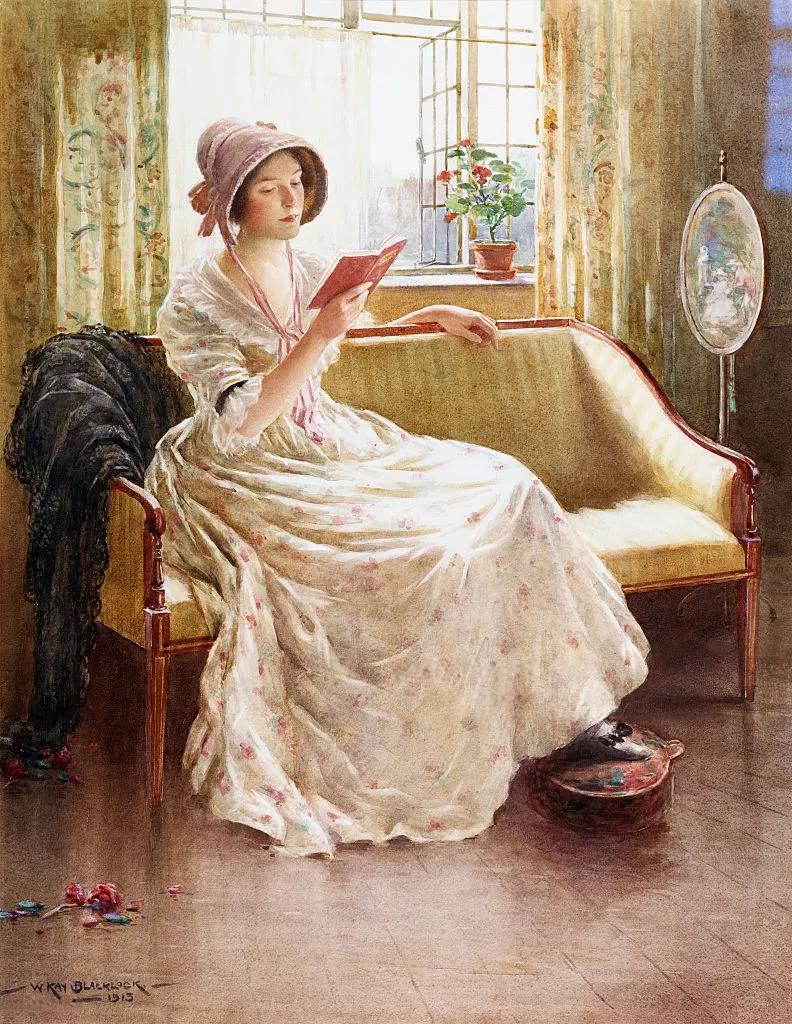
Photo: Frederic Edwin Church, Public domain, via Wikimedia Commons
Most great art partnerships sound good on paper. Two painters who met in grad school. A director and a cinematographer with shared references. A band where everyone grew up listening to the same records. Comfortable overlap. Shared vocabulary. Mutual understanding.
And then there are the other ones.
The ones where neither person should logically be in the same room. Where the first meeting is more argument than conversation, where the finished work confuses both of their existing audiences, and where the process is, by most accounts, genuinely uncomfortable. These are the partnerships we're interested in. Because something strange happens when creative friction stops being a problem to manage and starts being the whole point.
Paint Meets Pulse: Visual Art and Electronic Sound
When Chicago-based painter Solange Merritt first heard Marcus Yee's music, she hated it. "It was this really aggressive, almost clinical electronic stuff," she says. "Very cold. I make these warm, layered pieces — lots of texture, lots of earth tones. I couldn't figure out what we were supposed to do together."
Yee, a producer and sound designer whose work has been licensed to tech companies and indie film directors, was equally skeptical. "Solange's work is beautiful but it's slow. My instinct is always toward movement, rhythm, something that propels you forward. I didn't know how to operate in her register."
They started anyway, commissioned by a Chicago arts nonprofit to create a site-specific installation for an industrial space in Pilsen. The concept: Merritt would paint in real time while Yee composed music that responded to her movements, tracked via sensors on her brushes and wrists. The music would then influence the painting — tempo shifts triggering color changes, frequency peaks pushing Merritt toward sharper marks.
The result was a 45-minute live performance that audiences could watch and a permanent installation of the final painting paired with a recorded score. Neither looks or sounds like anything either of them had made before.
"The painting is way more chaotic than my usual work," Merritt admits. "There are marks in there I would have stopped and corrected if I'd been alone. But I couldn't stop — the music kept pushing me. And honestly those are the best marks in the piece."
Code and Cotton: Data Science Meets Textile Art
On the surface, Amara Diallo and Jin Park have nothing in common professionally. Diallo is a textile artist and weaver based in Philadelphia whose practice is rooted in West African weaving traditions. Park is a data scientist who makes generative art in his spare time — algorithmic patterns rendered in code, usually displayed on screens.
They met at a maker fair and started arguing about whether handmade and digital processes could produce equivalent complexity. "I was saying that the kind of variation you get in hand-weaving — the slight inconsistencies, the human error — was irreproducible by algorithm," Diallo recalls. "Jin said that was just romanticism."
Six months later they had a collaboration that proved both of them right and wrong simultaneously.
Park built an algorithm that analyzed Diallo's existing weavings, identified the patterns of variation that appeared in her handmade work, and generated new pattern designs that incorporated those "errors" as intentional features. Diallo then wove the algorithm's outputs by hand, introducing new variations that Park fed back into the system.
The series of twelve weavings they produced — now part of a traveling exhibition called Human Error, Machine Learning — are unlike anything in either of their portfolios. They're too systematic to look purely handmade, too warm and irregular to look purely digital. They exist in a category that neither artist had previously occupied.
"The argument we were having," Park says, "turned out to be the work."
Spoken Word and Silence: Poetry Meets Spatial Installation
Poet and performer Deja Whitmore has built a following in Brooklyn's spoken word scene on the strength of her voice — her performances are kinetic, rhythmic, intensely verbal. Sculptor and installation artist Tomás Guerrero makes work that is almost aggressively quiet: large-scale pieces in concrete and found metal that ask viewers to slow down, sit with discomfort, resist the urge to interpret too quickly.
Their collaboration began as a disaster.
"Tomás doesn't like words in his work," Whitmore says, laughing. "He was very clear about that upfront. And I am literally made of words. So our first meeting was just me trying to understand what I was even doing there."
Guerrero's position was that language closes things down — that once you name something, you stop seeing it. Whitmore's position was that language, deployed right, could open things up in ways that silence couldn't. Neither of them moved.
So instead of resolving the tension, they built it into the piece. For their joint installation at a Queens gallery last spring, Guerrero created a series of concrete forms arranged in a darkened room. Whitmore performed a poem — not about the sculptures, not explaining them, but circling them obliquely — that played through speakers at a volume just below comfortable comprehension. You could almost hear the words. You couldn't quite catch them.
Audience response was polarized in exactly the way both artists had feared and, eventually, hoped for. Some people found it frustrating. Some found it devastating. Almost everyone stayed longer than they planned to.
"The piece worked because we didn't agree," Guerrero says. "If I had convinced her or she had convinced me, it would have just been one of our regular projects."
Traditional and Transgressive: Classical Training Meets Street Art
Maybe the most publicly contentious pairing on this list is the ongoing collaboration between muralist and graffiti writer Enrique "Rook" Salazar and classically trained oil painter and printmaker Catherine Holst. Rook works fast, large, and in public. Holst works slowly, in a private studio in Portland, Oregon, and has strong opinions about permanence and craft.
Their first joint mural — a commission in Portland's Pearl District — generated online arguments about whether graffiti aesthetics and fine art techniques could coexist without one cannibalizing the other. Most people assumed Holst's classical approach would domesticate Rook's energy. The opposite happened.
"She pushed me to slow down in a way that felt almost violent," Rook says. "I'm used to making decisions in seconds. She wanted to talk about a single color choice for an hour. I thought I was going to lose my mind."
Holst, for her part, found the experience of working at scale and speed revelatory. "I had to let go of control in a way my studio practice never required. Rook makes marks and moves on. There's no second-guessing. I had to match that rhythm or the piece would fall apart."
The mural they produced has since been photographed and shared widely — it's the kind of piece that stops people on the sidewalk. The technical precision of Holst's rendering sits inside the gestural confidence of Rook's composition in a way that feels genuinely new. Neither artist is sure they could replicate it alone.
Why Friction Is the Feature
Across all four of these partnerships, the pattern is the same: the thing that made collaboration difficult was also the thing that made the work better. The disagreement wasn't a bug in the process. It was the engine.
Solo practice gives you control. It also gives you your own blind spots, your own habits, your own comfortable ceiling. A collaborator who shares your aesthetic isn't going to push you past it. But someone who genuinely sees differently — who would have made entirely different choices — forces you to defend, abandon, or transform your instincts in real time.
That's not comfortable. It's also, apparently, where some of the most interesting work alive right now is coming from.
The ladder goes higher when two people are climbing it from different sides.