Hiding in Plain Sight: The Artists Making Work for the Accidentally Attentive
There's a mural in a Chicago alley that most people only see because they dropped their keys. It's painted on the lower half of a dumpster enclosure — maybe eighteen inches off the ground — and it depicts a tiny, meticulously rendered library full of books nobody has ever written. The artist, a muralist who goes by Celo, put it there on purpose. Not as a statement about humility. Not as some anti-gallery provocation. Just because, as she puts it, "the people who find it are already in the right headspace."
That logic — strange, a little counterintuitive, kind of beautiful — is driving a growing corner of the contemporary art world. Call it low-altitude work, accidental art, or just the stuff you trip over. Whatever the label, a real cohort of artists across the US is deliberately designing pieces for viewers who are looking down, looking sideways, or not really looking at all.
The Phone Is Not the Enemy
Here's the take you didn't expect: some of these artists are actually counting on your screen addiction.
When people walk with their eyes angled toward their phones, they're scanning a visual band that traditional public art completely ignores. The average eye-level mural, the billboard, the gallery piece hung at 57 inches (the industry standard, aligned with the average human eye) — all of it exists in a register that the distracted pedestrian misses entirely. But the sidewalk? The base of a stairwell? The underside of a park bench? That's prime real estate for anyone glancing down between notifications.
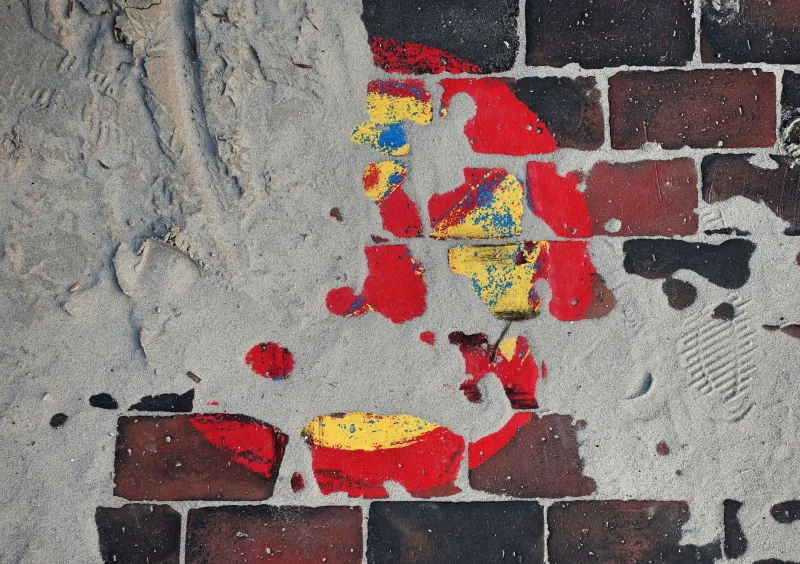
Artist duo Frond & Mace, based out of Portland, Oregon, spent the better part of last year installing small ceramic tile pieces at ground level across the city's transit corridors. Each tile is about the size of a dinner plate, pressed into gaps in existing pavement or fixed to the bases of utility poles. Some are abstract. Some contain text. One just says "you looked."
"We're not interested in art that demands your attention," says the duo's co-founder, Mace. "Demanding attention is exhausting for everyone. We'd rather offer something to the people who are already pointed in our direction."
The tiles have accumulated a modest but devoted following. Not through press coverage — through people photographing them and posting to local neighborhood apps, tagging the locations like secret waypoints on a map only some people can read.
The Paradox of Designing to Be Missed
Here's where it gets philosophically interesting, and maybe a little uncomfortable if you've spent any time thinking about what art is for.
If you make something that most people will never see, is it art? Or is it closer to a private joke, a diary entry, a letter to no one?
The artists working in this space don't seem particularly bothered by the question. In fact, several of them argue that the possibility of being missed is exactly what makes the work honest.
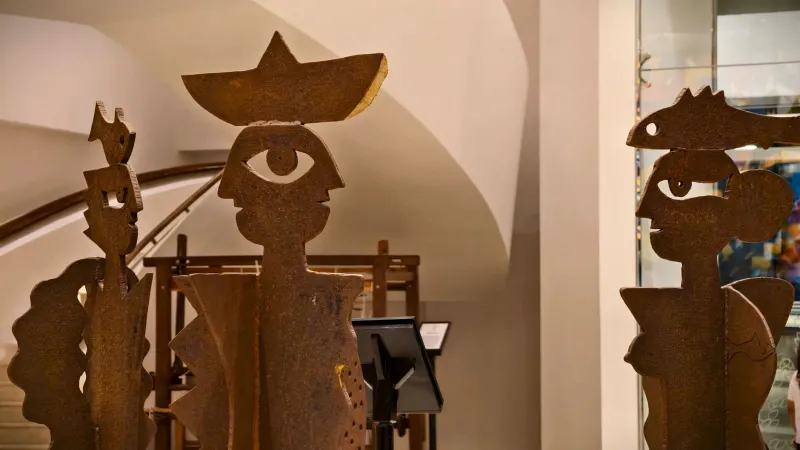
"Every piece of art that goes into a gallery is already pre-sorted," says Nadia Okonkwo, a sculptor based in Detroit who has spent three years placing small bronze figures in unexpected low-traffic spots throughout the city — tucked into the corners of parking garages, nestled in the roots of old trees, balanced on the ledges of buildings' lower floors. "The gallery says: this is worth your time. The institution has already decided for you. My work doesn't have that guarantee. You have to decide for yourself whether it was worth stopping for."
There's something almost democratic about that framing, even if it risks sounding precious. The work doesn't require you to have bought a ticket, to have read the catalog notes, to have shown up on the right day. It requires only that you were present enough to notice.
What Constraint Does to Creativity
There's also a practical argument for working at the margins of visibility, and it has less to do with philosophy than with craft.
When you're not designing for the expectant gaze — the viewer who showed up specifically to be impressed — you lose the pressure to perform. That changes what you make.
Celo, the Chicago muralist, describes the dumpster enclosure piece as some of her most technically careful work, precisely because she knew most people wouldn't see it. "When nobody's watching, you stop making choices for the audience," she says. "You start making choices for the work."
This tracks with something that artists across disciplines have long understood: constraints generate creativity in ways that total freedom rarely does. Working within an overlooked space — low, tucked away, accessible only to the accidentally attentive — imposes a specific kind of limitation that turns out to be generative. The work can't rely on scale to impress. It can't use institutional context as a crutch. It has to function on its own terms, in the moment someone stumbles across it.
The Viewer Who Wasn't Expecting You
There's a specific quality to the encounter when you find something you weren't looking for. Anyone who has ever rounded a corner and stopped dead in front of an unexpected piece of street art knows the feeling — a little jolt, a moment of reorientation, the slight disorientation of having the world briefly rearranged.
Frond & Mace call it "the double take economy." The idea that the emotional return on an unexpected discovery is disproportionately high compared to a planned cultural experience. You go to MoMA, you see great work, you feel the appropriate amount of moved. You find a tiny ceramic tile on the ground in the Pearl District and you tell three people about it by dinner.
"We're not anti-gallery," Mace is careful to clarify. "We love galleries. We just think there's a different kind of engagement available when the viewer doesn't know they're a viewer yet."
That last phrase is worth sitting with. The viewer who doesn't know they're a viewer yet. The person mid-scroll, mid-commute, mid-argument with themselves about whether to get the burrito. They're not in art mode. And then, suddenly, they are.
Looking Down as a Practice
Maybe the larger argument these artists are making isn't just about where art gets placed. It's about what kind of attention we're cultivating — in viewers, sure, but also in ourselves.
To notice the thing at ground level, you have to be moving slowly enough, or distracted enough, or humble enough to be looking down. That's not the triumphant posture of someone ascending a ladder toward some elevated vision. It's the posture of someone who tripped, or stopped, or just happened to be looking at the right angle at the right moment.
And maybe that's exactly who art should be talking to.
Not the person who arrived with expectations. Not the one who already knew what they were going to feel. The one who got surprised — by the bronze figure in the tree root, by the tile that says "you looked," by the tiny library on the dumpster that nobody asked for and that somehow tells you everything.
The audience below isn't a consolation prize. They might be the whole point.