The Morning After the Masterpiece: What Nobody Tells You About Creative Partnerships
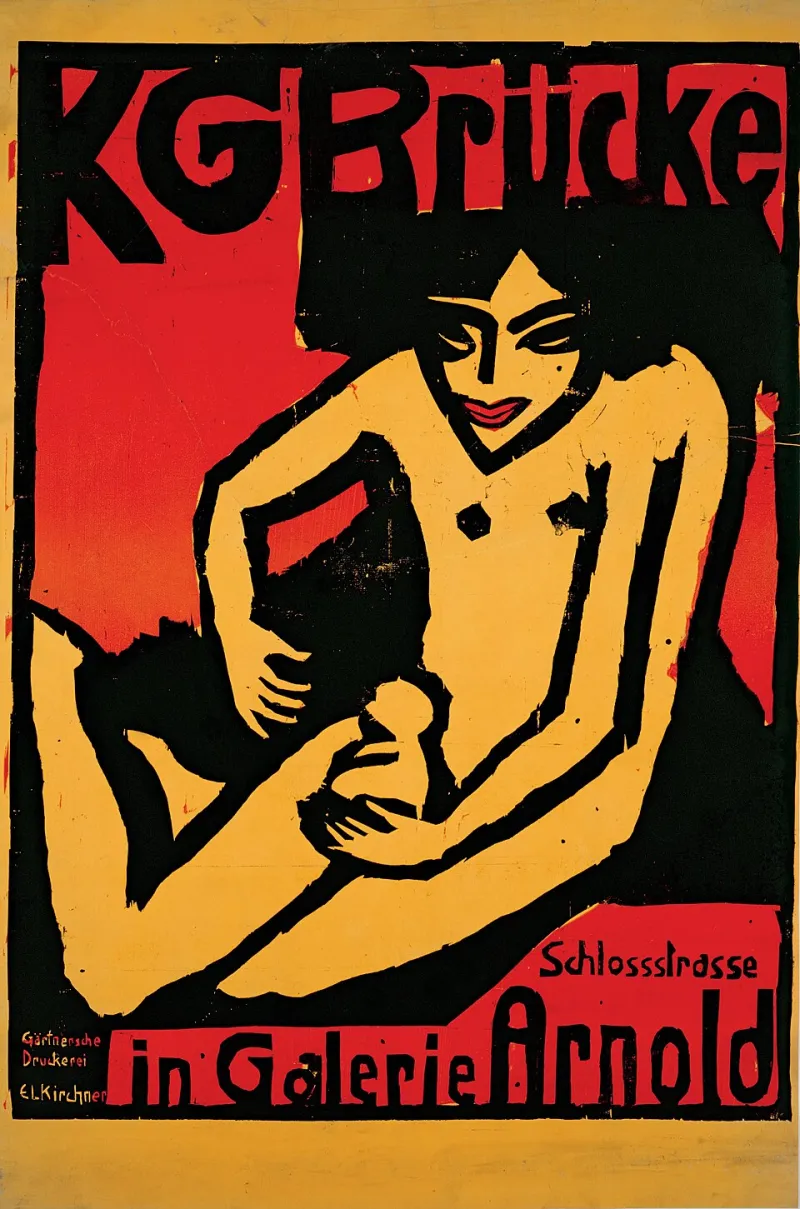
Photo: Ernst Ludwig Kirchner, Public domain, via Wikimedia Commons
Let's talk about the part of the story that doesn't make it onto the gallery wall.
Two artists come together. Their visions collide beautifully. The work they make is electric — better, somehow, than either of them could have produced alone. The press eats it up. The Instagram posts write themselves. "Creative partnership" becomes the buzzword du jour, and suddenly everyone wants in on the magic.
Then the magic starts costing something.
The Romanticization Problem
We are absolutely obsessed with the collaboration narrative right now. And honestly? It makes sense. In a culture that rewards hustle and individual achievement, there's something genuinely radical and appealing about the idea of two creative minds merging into something greater than themselves. The mythology is intoxicating.
But the art world — including a lot of well-meaning progressive spaces — has gotten a little too comfortable skipping over the part where collaboration goes wrong. And it goes wrong a lot.
Talk to enough working artists and the stories start to sound familiar. The project that took twice as long because nobody could agree on anything. The credit that got quietly redistributed after the work got attention. The collective that dissolved in a group chat argument at 11pm on a Tuesday. The duo that stopped speaking entirely, their collaborative work now sitting in collections neither of them can look at without flinching.
"There's this pressure to perform the perfect partnership," says one Brooklyn-based multidisciplinary artist who asked to remain anonymous. "You post the process photos, you talk about each other in interviews like you're completing each other's sentences, and the whole time you're going home and rage-journaling because you spent six hours arguing about a font choice."
The Credit Question
If there's one issue that surfaces more than any other in conversations about collaborative breakdowns, it's credit. Who gets the idea acknowledged? Whose name goes first? When a piece gets picked up by a major outlet, whose bio leads the paragraph?
These aren't petty concerns. For emerging artists especially, attribution isn't just about ego — it's about career trajectory, grant eligibility, residency applications, and the slow accumulation of a professional identity. When that gets muddied in a collaboration, the fallout can follow someone for years.
Several artists we spoke with described versions of the same experience: entering a collaboration as equals and gradually watching the narrative reshape itself around one partner. Sometimes it was intentional. More often, it wasn't — one person was simply louder, more connected, or more comfortable self-promoting. The work became "their" work by default, not by decision.
"I made a piece with someone more established than me," recalls a painter based in Atlanta. "It was genuinely fifty-fifty. But every time it was covered, it was their name first, their vision foregrounded. I raised it once and was told I was being 'sensitive.' I didn't collaborate with anyone for two years after that."
When the Process Becomes the Problem
Creative partnerships also carry a particular kind of burnout that's different from solo-project exhaustion. When you're working alone, you can step away. You can let something sit. You can change your mind without having to convince anyone else.
In a collaboration, every decision is a negotiation. Every pivot requires buy-in. And if the two parties have different working styles — one who needs silence and solitude, one who processes out loud; one who works in bursts, one who works in slow accumulative layers — the friction can be relentless.
This is especially true in artist collectives, which often begin with shared values and a genuine sense of community and slowly become something that looks more like an unpaid administrative job with creative conflict baked in.
"I loved the people in my collective," says a video artist from Portland. "I still do. But toward the end, I was spending more energy managing group dynamics than making work. Every meeting was a mini United Nations. I burned out on something I genuinely loved because the collaboration structure was eating the actual art."
The Breakup Nobody Talks About
Artistic breakups are real, they're often painful, and the art world has almost no language for them. We have plenty of frameworks for romantic endings — therapy, time, mutual friends taking sides. But when a creative partnership dissolves, there's no script. The shared work still exists. The joint social media accounts still exist. The collectors who bought into the mythology of the partnership still exist.
And unlike a band breaking up, which at least gets a press release, most artistic collaborations just quietly stop. One person stops responding to emails. A joint project page goes dark. Two names that used to appear together start appearing separately, and nobody explains why.
The silence can be its own kind of damage — especially for the person who didn't initiate the ending.
So When Should You Actually Collaborate?
None of this is an argument against collaboration. Some of the most vital, necessary art being made right now is coming out of genuine creative partnerships and collectives. The work that emerges when two distinct visions collide productively is genuinely irreplaceable.
But going in with clear eyes matters. A lot.
Before committing to a creative partnership, ask the questions that feel awkward to ask: How will credit be attributed, in writing, before the work is made? What happens if one of us wants to exit? Who owns the work if the partnership dissolves? What does decision-making look like when we disagree?
These conversations feel transactional. They are. That's not a bad thing. A collaboration with a clear structure isn't less romantic — it's more likely to survive long enough to produce something worth making.
Climbing Solo Isn't Failure
Here's the thing the current collaboration narrative gets wrong: working alone is not a lesser option. Some artists do their best, most honest work without a partner. Some creative visions are too specific, too personal, or too idiosyncratic to survive the compromise that collaboration requires. Knowing that about yourself is a form of self-awareness, not a deficit.
The ladder has always been a solo climb. You can have people supporting it from below, people waiting at the top, people cheering from the ground. But the rungs are yours.
Collaboration can absolutely be a superpower. But so can the clarity of knowing when it's not the right tool for the job — and having the honesty to say so before you're both standing in the wreckage of something that used to be good.