Shaky Ground, Honest Work: What Instability Does to Your Art That Comfort Never Will
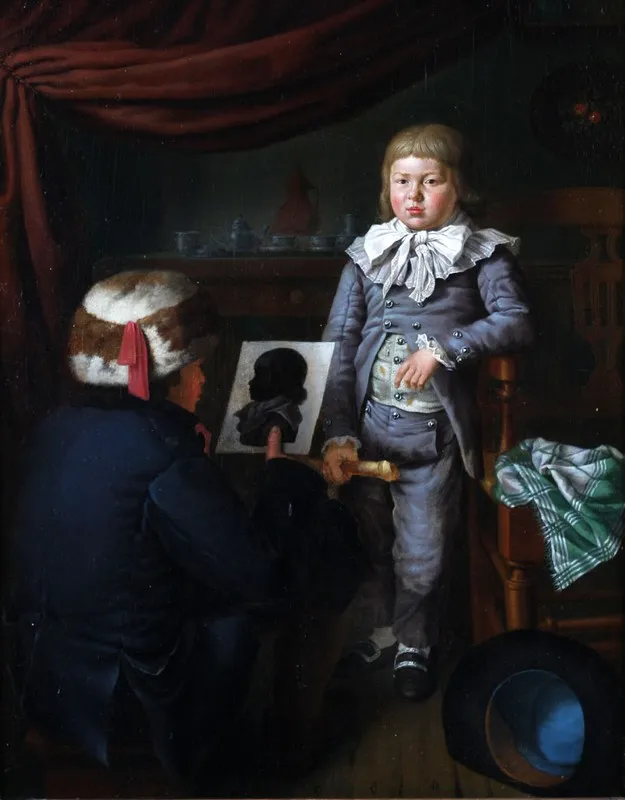
Photo: Jacob Schwartzenbach, Public domain, via Wikimedia Commons
Here's a question worth sitting with: when was the last time you made something you were truly proud of, and were you comfortable when you made it?
Not "productive comfortable." Not the cozy-studio-good-playlist kind of comfortable. Actually, genuinely at ease — no deadline breathing down your neck, no financial pressure, no personal chaos bleeding into the edges of the work.
For most artists, the honest answer is: probably not. And that might not be a coincidence.
Your Brain on Imbalance
Neuroscientists have been quietly building a case for what a lot of working artists already suspect in their gut. When the body detects physical instability — a surface that shifts, a height that disorients, a posture that demands constant micro-correction — the brain enters a state researchers sometimes call heightened somatic awareness. Basically, your nervous system lights up. You become more present, more attuned to the immediate moment, because survival instinct demands it.
What's interesting is what that does to decision-making. Studies on embodied cognition suggest that physical states bleed directly into cognitive ones. When your body is working harder to maintain equilibrium, your brain becomes less interested in abstract self-editing and more focused on direct, instinctive response. The inner critic — that exhausting voice that second-guesses every brushstroke — gets crowded out by something more immediate.
In plain terms: wobbling makes you stop overthinking.
For artists who have spent years trying to quiet perfectionism through meditation apps and journaling and expensive workshops, that's kind of a wild thing to hear. The answer might have been a ladder on uneven ground the whole time.
The Tightrope Painters (Yes, That's a Thing)
Take the small but genuinely committed community of artists who work on suspended or moving surfaces — slack lines, scaffolding platforms that sway, boats, even the backs of moving vehicles. These aren't stunt artists chasing clout. Many of them stumbled into the practice the same way: they tried it once, hated how exposed it felt, made something that surprised them, and couldn't stop.
One muralist based out of Asheville, North Carolina, described her first experience painting on a suspended scaffold over a three-story drop. "I was terrified. I was sweating. Every mark I made felt permanent in a way it never did on the ground because I couldn't fuss over it — I had to keep my body balanced and just commit." She paused. "The work from that day is still the best thing I've ever made."
That word — commit — comes up constantly when artists talk about working in precarious conditions. Instability forces the hand. Literally. When you're managing your physical equilibrium, you don't have the spare bandwidth to agonize over whether a line is perfect. You make the line. You move on. And sometimes, in that unselfconscious forward motion, something genuine slips through.
Metaphorical Wobble Is Just as Real
Physical instability is the most literal version of this, but artists are quick to point out that life instability works the same way. Grief. Divorce. Job loss. Illness. Moving across the country with no plan. The moments when the ground shifts under your feet metaphorically tend to produce work that's harder to dismiss.
There's a reason so many artists point to their most chaotic personal periods as their most creatively fertile ones. It's not romantic suffering for its own sake — it's that crisis strips away the luxury of perfectionism. When everything else is uncertain, the art stops being about getting it right and starts being about getting it out.
A painter living in Detroit talked about the series of work she made in the months after her mother's death. "I had no energy for my usual process. I couldn't do the sketches, the color studies, all the prep work I normally do. I just painted. And I cried while I painted. And the work was messy and direct and I didn't care if it was good." She laughed a little. "It was the most honest work I've ever made. People felt it immediately."
That directness — that inability to perform competence when you're barely keeping it together — is something no amount of technique can fake.
Comfort Is Creativity's Quiet Killer
This is the uncomfortable part of the conversation, because comfort is what we're all chasing. Better studio, better gear, better circumstances. We build routines specifically to reduce friction and uncertainty. And those things aren't wrong — sustainability matters, especially for artists who've historically been told to just suffer for their craft.
But there's a difference between the kind of comfort that supports a sustainable practice and the kind that insulates you from creative risk. When everything is optimized and controlled, the work can start to reflect that. Clean. Competent. Safe. Nothing that makes anyone — including the artist — feel anything they weren't expecting to feel.
The wobble principle isn't an argument for manufacturing misery. It's an argument for staying curious about discomfort rather than reflexively eliminating it. For noticing when the resistance you feel toward a project isn't laziness but the specific anxiety of making something that actually matters. For sometimes choosing the uneven surface over the flat one, just to see what happens to the work.
How to Introduce Instability Intentionally
For artists who want to experiment without, you know, painting on a tightrope, the entry points are more accessible than they sound.
Work faster than you're comfortable with. Set a timer. Give yourself twenty minutes for something that normally takes two hours and see what decisions you make when you can't afford to second-guess them.
Change the surface. If you always work on stretched canvas, try paper tacked to a wall. If you always work at a table, try the floor. If you always work standing, try sitting on the ground. Physical novelty disrupts habitual thinking.
Make work during the hard times instead of waiting until things settle. The "I'll get back to the studio when life calms down" move is understandable, but it's also a way of guaranteeing that the work never touches the most alive parts of your experience.
And occasionally, literally get off the ground. Work on a ladder. Work at an uncomfortable height. Let your body remind your brain that the stakes are real.
What the Wobble Is Actually Saying
Instability, physical or otherwise, is the body's way of demanding presence. And presence — full, unguarded, unselfconscious presence — is the one ingredient that no technique can substitute for.
The most honest art tends to come from artists who, for one reason or another, couldn't afford to be dishonest. Who were too scared, too grief-stricken, too off-balance to perform competence. Who made the mark because they had to, not because they'd decided it was the right one.
That's not a comfortable place to work from. But then again, comfort was never what this was about.