Build the Net Before You Jump: How Smart Artists Use Structure to Take Bigger Risks
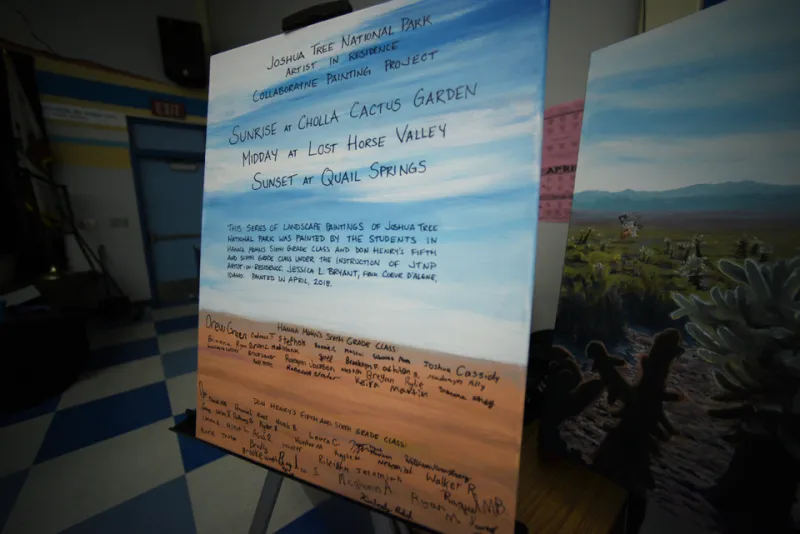
Photo: Joshua Tree National Park, Public domain, via Wikimedia Commons
There's a myth that keeps circulating in art school hallways and Instagram comment sections alike: that real creative freedom means operating without guardrails. No deadlines, no collaborators, no institutional strings attached. Just you, your vision, and the open road.
It's a romantic idea. It's also, for most artists, a fast track to paralysis.
The artists producing the most genuinely surprising, boundary-pushing work right now aren't doing it in a vacuum. They're doing it inside carefully constructed frameworks — residencies with defined timelines, mentorship relationships with built-in accountability, studio-sharing arrangements that create low-stakes feedback loops. The scaffold, it turns out, isn't a compromise. It's the whole point.
Why Total Freedom Backfires
Here's the counterintuitive truth about creative risk: the bigger the leap, the more you need something solid beneath you before you take it.
When there's nothing at stake and no one watching, there's also no real tension — and tension is where interesting art lives. Psychologists have a term for this: the Goldilocks zone of challenge, where the task is hard enough to demand full engagement but structured enough to feel survivable. Pure, unstructured freedom tends to push artists outside that zone in the wrong direction. Instead of liberating, it overwhelms.
Talk to any artist who's received an unexpected windfall of time — a sabbatical, a sudden gap between projects — and a surprising number will tell you the same thing: they froze. Not because they lacked ideas, but because without a container to pour those ideas into, nothing had shape.
The container matters.
The Residency as Permission Slip
Residency programs have been around long enough that they can feel like a bureaucratic checkbox on an artist's CV. But at their best, they function as something more radical: a socially sanctioned space to fail.
When you're at a residency — whether it's a month at the Vermont Studio Center, a summer at Skowhegan, or a three-week stint at a smaller regional program in rural New Mexico — you're operating under a set of understood conditions. You're supposed to be experimenting. You're expected to not have it figured out yet. The institution has essentially handed you a permission slip to fall apart a little.
That permission is more valuable than it sounds. For artists who spend most of their working lives managing client expectations, grant reporting, or the ambient pressure of social media visibility, having a designated period where the whole point is process — not product — can unlock work they didn't know they had in them.
The key isn't the location or even the stipend. It's the psychological reframe. The residency tells you: this is a safe place to attempt the ambitious thing. And that message, delivered with institutional weight behind it, actually lands.
Mentorship Isn't Just Advice — It's Architecture
A good mentor doesn't just tell you what to do next. They hold a version of you that's further along than the one you can currently see, and they make that version feel reachable.
For artists attempting their most ambitious work, that function is structural. It's not about having someone to call when things go sideways — though that matters too. It's about the ongoing presence of someone who has already navigated terrain you're just entering, and who can help you distinguish between the productive discomfort of real creative risk and the unproductive suffering of spinning your wheels.
Mentorship relationships work best when they're intentional rather than accidental. The most effective ones have some loose scaffolding of their own: regular check-ins, agreed-upon goals, a shared understanding of what the mentee is actually trying to build. Without that structure, even the most generous mentor relationship can drift into pleasant conversation that doesn't move anything forward.
Some of the most innovative emerging artists in the US right now are actively engineering these relationships — seeking out people whose careers they admire and making specific, bounded asks. Not "can you be my mentor" (vague, high-commitment, easy to decline) but "can I show you this body of work and get your honest reaction" (concrete, low-commitment, easy to say yes to). They're building the relationship the way they build everything else: one intentional step at a time.
The Collaborative Studio as Pressure Valve
Working alongside other artists — even if everyone's doing completely different things — creates a kind of ambient accountability that solo studio practice rarely generates on its own.
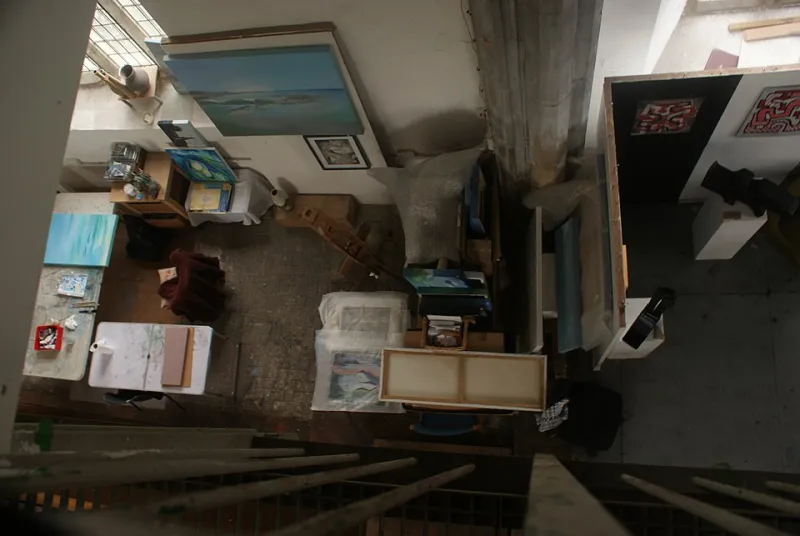
Shared studio spaces, particularly those organized around some loose common purpose (a specific medium, a shared neighborhood, a collective identity), function as low-stakes laboratories. You see what other people are attempting. You watch them struggle and recover. You get feedback you didn't ask for and sometimes it's exactly what you needed. The collective studio doesn't tell you what to make, but it creates the conditions where making feels less lonely and, crucially, less final.
When everything you do happens in isolation, every decision carries more weight than it should. The shared space distributes that weight. Your half-finished experiment isn't a private failure — it's just Tuesday.
Designing Your Own Permission Structure
The artists who consistently push their practice into genuinely new territory tend to be deliberate about constructing these frameworks before they need them — not scrambling for support after they've already jumped.
That might look like applying to residencies a year before you plan to attempt a major project, so the institutional backing is in place when you're ready to leap. It might mean building a small cohort of trusted peers who agree to share work-in-progress on a regular schedule, creating a container where vulnerability is normalized. It might mean seeking out a funding program — the NEA, state arts councils, foundation grants — not just for the money but for the legitimacy and deadline structure that comes with it.
The goal isn't to eliminate risk. It's to make the risk survivable. To build enough net that when you inevitably slip — and you will slip, because that's what real creative risk involves — you don't fall all the way to the ground.
The Scaffold Comes Down Eventually
Here's the thing about scaffolding: it's temporary by design. You put it up so you can build something that stands on its own. The residency ends. The mentorship evolves. The collaborative studio disperses. And if the structure did its job, you walk away with a piece of work — or a practice, or a way of seeing — that didn't exist before.
The mistake is thinking the scaffold is a crutch. That needing support means you're not ready, not resilient, not the real deal. The artists who've actually climbed to the places worth going know better. They built the net. They used it. They built it again for the next climb.
Permission to fall apart isn't weakness. It's infrastructure.