Who Gets to Stand on Top? Artists Are Rethinking the Whole Damn Structure
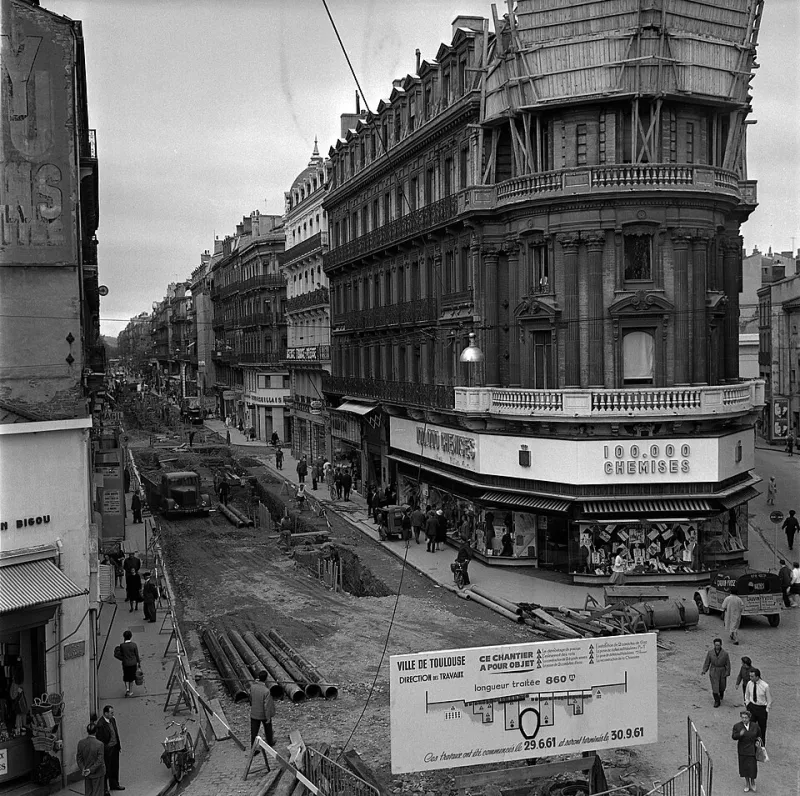
Photo: André Cros, CC BY-SA 4.0, via Wikimedia Commons
There's something quietly radical about taking the most unglamorous object in a working artist's studio — the beat-up aluminum ladder propped in the corner, paint-splattered and slightly wobbly — and putting it front and center. Not as a tool. As the point.
That's exactly what a growing cohort of contemporary artists across the US is doing. They're incorporating ladders, scaffolding, and vertical frameworks not because they need to reach the ceiling, but because they want to interrogate what reaching means in the first place. Who climbs? Who watches from below? Who built the rungs, and did they ever get to use them?
It sounds conceptual — because it is. But it's also visceral, funny, and sometimes gut-punch honest.
The Infrastructure of Ambition
Let's be real: the ladder has always been a loaded symbol in American culture. "Climb the ladder," we say, as if success were a fixed vertical structure that everyone has equal access to. Spoiler: they don't. And artists — particularly those from working-class backgrounds, communities of color, or outside the coastal gallery circuit — have been living that reality for decades while the art world cheerfully pretended otherwise.
What's changed is that some of those same artists are now making the ladder itself the subject of their work. Not metaphorically, but literally. Physical structures — steel scaffolding, wooden stepladders, industrial rigging — are showing up in installations, performance pieces, and public interventions as a way of making visible the systems that elevate some voices and keep others grounded.
Chicago-based installation artist Marcus Delray (not his full legal name — he prefers it that way, which is its own kind of statement) spent two years building what he calls "load-bearing portraits": large-scale scaffolding structures where each crossbar holds a framed image of someone in his neighborhood who has never been inside a gallery. The work toured three community spaces before a single commercial venue picked it up. That delay, he says, was the piece working exactly as intended.
"The infrastructure of the art world is the art world," Delray has said in interviews. "I'm not interested in pretending that context doesn't exist."
Building Your Own Pedestal
There's a DIY energy running through a lot of this work that feels distinctly American — and distinctly of this moment. When institutions are slow, inaccessible, or just plain indifferent, you stop waiting for the invite. You build the room yourself.
New York-based performance artist Sola Okonkwo has taken this literally. Her ongoing series, Elevate/Excavate, involves constructing a small wooden platform — essentially a handmade pedestal — in public spaces across different boroughs, then standing on it and reading aloud from the rejection letters she's received from grants, residencies, and galleries. The letters are read without commentary. No dramatic pauses. Just the language of institutional gatekeeping, delivered from a height.
The effect is disorienting in the best way. The pedestal signals authority and importance. The content undercuts it. The audience isn't sure whether to laugh, wince, or both.
"I'm interested in what happens when you stop asking for permission to be seen," Okonkwo explained at a recent artist talk in Brooklyn. "The pedestal isn't ironic. I built it. It's real. I'm standing on it. The rejection is real too. Both things are true."
Scaffolding as Social Commentary
Beyond individual practice, there's a broader conversation happening about what scaffolding represents in urban American life. Walk through any gentrifying neighborhood and you'll see it everywhere — the physical scaffolding of transformation, which is almost always someone else's transformation happening to someone else's community.
Los Angeles muralist and conceptual artist Tierra Vásquez has spent the last several years using scaffolding not to paint murals, but to frame the walls where murals used to be before buildings got flipped. Her temporary installations draw a rectangle of steel pipe around a blank or painted-over surface, marking absence. The scaffold becomes a monument to erasure.
"Scaffolding is how you build up and how you cover over," Vásquez says. "It's neutral until it isn't."
Her work has been covered by local press and sparked genuine neighborhood debate — which, she'll tell you, is the entire goal. Art that generates a city council meeting is art that's doing something.
The Vertical and the Political
There's no separating this conversation from class. The ladder as a symbol of upward mobility is baked so deep into American mythology that it barely registers anymore. First-generation artists, artists without MFAs, artists who work day jobs and make work on weekends — they know the ladder metaphor intimately, because they've been told their whole lives that if they just work hard enough, they'll get there.
What these artists are pushing back against isn't ambition. It's the pretense that the structure is neutral. That the rungs are evenly spaced. That the ladder doesn't wobble more for some people than others.
Philadelphia sculptor Jonah Reyes builds ladders out of reclaimed materials — broken furniture, scrap lumber, discarded hardware — and suspends them at angles that make them functionally useless. They're beautiful. They're also going nowhere. "A ladder that can't be climbed is still a ladder," Reyes says. "It still tells you something about what we were supposed to want."
Stop Waiting for the Lift
What ties all of this work together isn't a unified aesthetic or even a shared political manifesto. It's an attitude: stop waiting for someone else to elevate you, and start interrogating the elevation itself.
That's not cynicism. If anything, it's the opposite — a stubborn insistence that the structures we inherit don't have to be the structures we keep. That you can drag the ladder into the gallery, stand it on its side, weld it into something new, or just leave it propped against a wall and ask everyone in the room what they see.
At Paints on Ladders, we've always believed that the most interesting art happens when someone decides to climb differently — or stops climbing altogether and starts building. These artists aren't waiting to be placed on a pedestal. They're making their own, one reclaimed plank at a time.
And honestly? That's the most ambitious thing we've seen in a while.